

The Baggage of Bad Group Projects
One person gets stuck doing all of the work

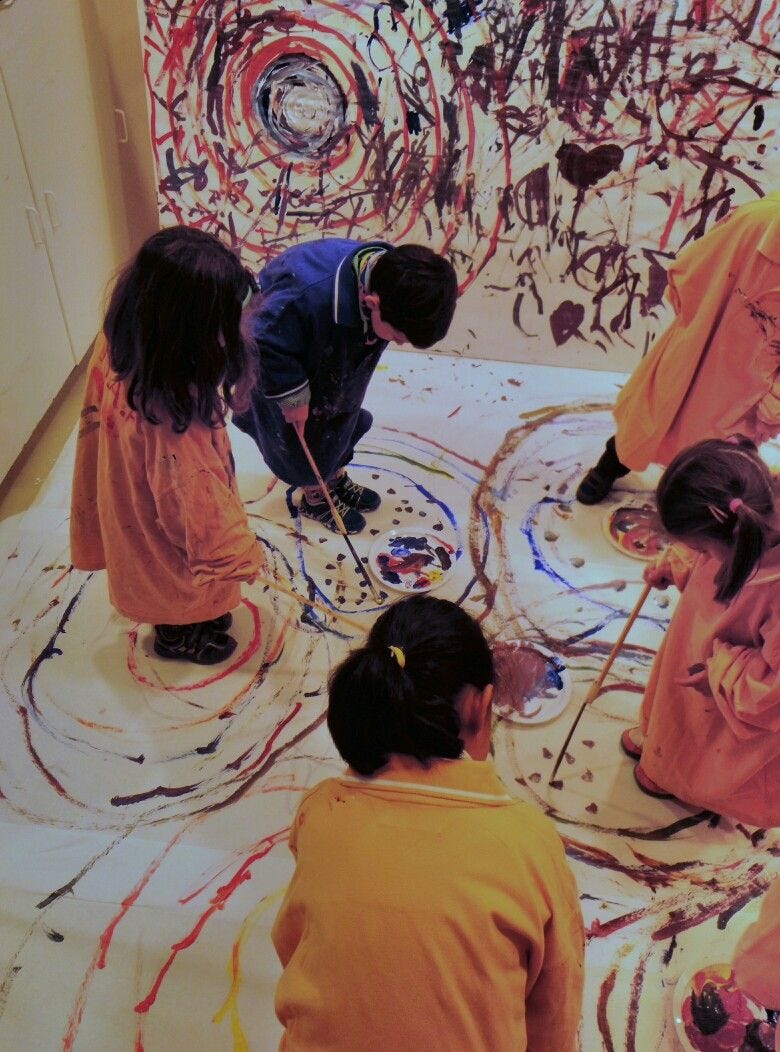
I remember hearing the mythology of group projects somehow before I even participated in one at school. You know how it goes: One person gets stuck doing all of the work.
Like any half-baked social rule learned young (like Lord of the Flies, like cafeteria tables) it’s hard to know if this one was genuinely true or if it was just easier to defer because it was so well advertised. No matter what, I’d always find myself in one of three roles: doing most of the work and resenting it, freeloading a bit and feeling guilty and/or elated, or trapped in the middle not knowing how to make sense of the drama between those two roles.
I’d like to think we invent these stories because the actual mystery of relationships – of collaboration, romance, friendship – is so wild at their core we need to somehow make sense of them. It is a response to the unpredictability that should be embraced as a good thing (we actually won’t know what will happen when in relationship with other people) but is instead boxed up into told you so typologies.
Still, these bad stories set us up for bad experiences that we drag around with us for the rest of our lives. The ghosts of group projects make us hesitate when signing up for a working group, or shrink back when conflict inevitably arises because we know how this goes, or smashes us into roles we’re tired of because we have always done them. Even when we were 10 and making a diorama!
The wild thing is that for many of us, group projects are the only experience we get in doing intentional, committed work alongside other people. Beyond that, there’s work, but this world is so shaped by financial incentive, power structures, and social norms it doesn’t set us up much better than school.
Dean Spade writes about the learned hierarchy of past working experiences in Mutual Aid:
“Most people have never been to a meeting where there was not a boss or authority figure with decision-making power. Most people work or go to school inside hierarchies where disobedience leads to punishment or exclusion. We bring our learned practices of hierarchy with us even when no paycheck or punishment enforces our participation, so even in volunteer groups we often find ourselves in conflicts stemming from learned dominance behaviors.”
These origins are all so important to name, I think, in an elephant-in-the-room kind of way. To not name them sets us up along a spectrum of denial where we:
Pretend we don’t have past experience shaping our behaviors even though we do
Show up overconfident because we think we have more experience than we do, when in reality we haven’t had many chances to practice
Approach group work with dread because of how bad past experience was
What becomes possible when we accept the baggage we’re carrying with us? Not deny its existence, not overstate its failure, but just accept it as it is?
or simply click that ₊˚.⋆⁺₊💜₊˚.⋆⁺₊ at the top if you indeed liked it, we always appreciate that here at group hug hq!! love to you all

LINKWORLD
Printable service trade templates for offering / asking for trades that can look like this
FoodRescueHero is a great app for food rescues (if you scroll down you can see a map and check out if it’s in your area), adding it to the megalist
Shareable is hosting a Mutual Aid 101 Learning Series, with an upcoming session on Tool Libraries, Mutual Aid & Community-led Disaster Response
Loved this zine interview with our local Reddit moderator
Really appreciated this practical, applicable story of building a local ‘parenting village’ with a flyer. “Start small—but start”!
Congrats to my dear friend Neeta who won the local library card design contest!!
No AI Webring, some good early internet energy here
Transhealth’s House Party Toolkit for fundraisers is great inspiration (or invitation if you’re local to Massachusetts)
And my favorite new anthem from none other than Chumbawamba (TRUST ME) that is not Tubthumping but was brought into my world by Ted Leo covering it recently and completely blowing me away
I experienced that dynamic all throughout school, until after college graduation, then suddenly it stopped, because, and here's the key:
From that point on, I only ever did group projects with people who wanted to be there.
Things get really wild when I ask my students to collectively decide how the course should be graded.